
A startup’s success has long been dominated by two figures, i.e., funding rounds and valuation multiples. Yet, as the digital landscape matures, a new metric of impact is emerging, particularly in India’s vibrant deep tech and AI sector.
For 2025, the Google for Startups Accelerator programme is not merely fostering growth; it’s engineering a fundamental, strategic shift in how Indian AI startups operate and compete on the global stage. The recently released Accelerator Impact Report paints a comprehensive picture of an ecosystem designed to tackle population-scale challenges while yielding unprecedented economic returns.
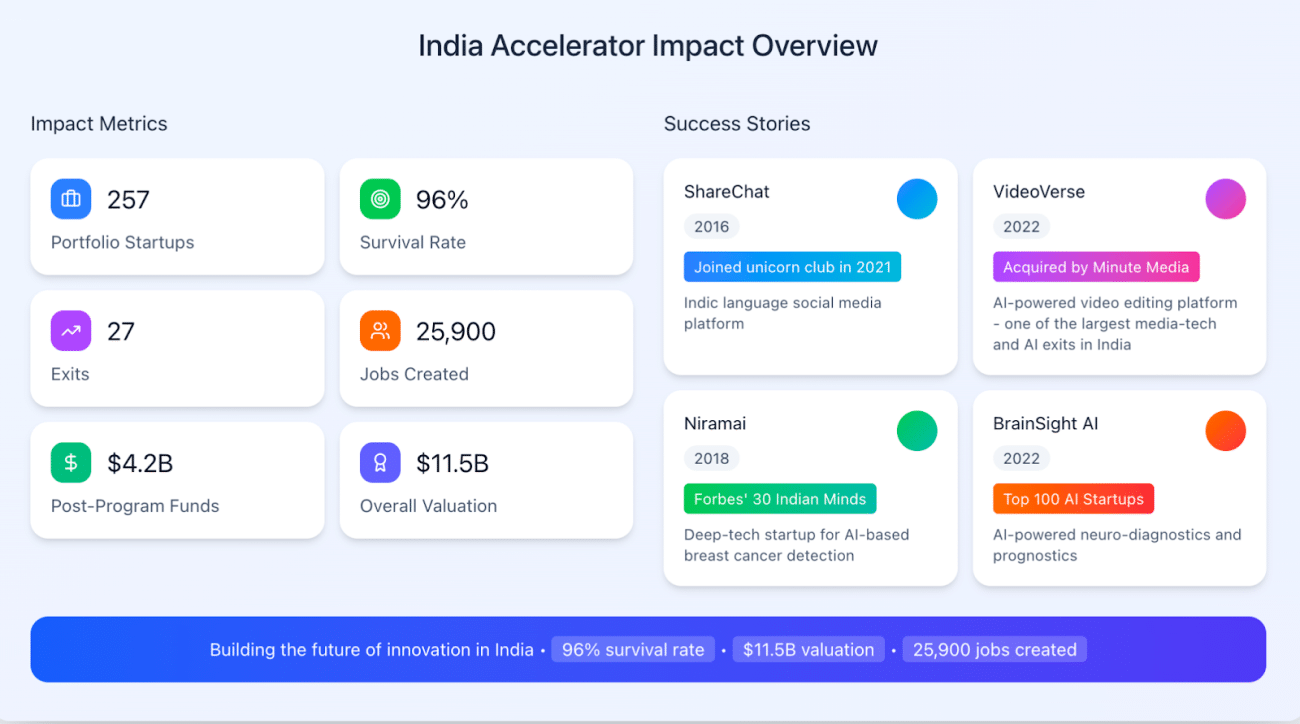
The economic impact of the accelerator’s portfolio has been positive. The 257 portfolio startups have achieved a high survival rate of 96%, secured $4.2 billion in post-programme funding, and collectively reached an overall valuation of $11.5 billion. Furthermore, they have spurred job creation, adding 25,900 new positions, and executed 27 exits.
Beyond Funding Metrics
The true measure of the accelerator’s value lies in how it helps startups achieve a demonstrable, strategic, competitive advantage by leveraging the “best of Google”.
As per Farish CV, the regional lead for AI startup programmes in India, “The measurable impact of the accelerator goes beyond standard funding and growth metrics.” The programme strategically categorises success into three key areas, demonstrating a focus on deep integration and operational excellence.
First, startups can optimise proprietary technology and improve cost efficiency by accessing Google AI platforms. Second, they can enhance core business performance and build market credibility through mentorship on their business models, ensuring products are financially successful. Third, there is a focus on precision partnerships and accelerated scaling, providing tailored support to address the specific challenges faced by high-potential startups.
For AI startups, efficiency is the new currency. The programme’s core offering is to enable startups to harness Google’s AI platforms, such as Gemini and Google Cloud, to deliver efficiency gains that provide a direct competitive edge.
SpotDraft provides a prime example of this success, he said. By integrating the Gemini API and utilising the Google Cloud Marketplace, the company achieved massive operational improvements in its AI contract management. The measurable results were significant: costs were reduced by 80%, accuracy increased by 30%, and latency decreased by 70%.
Similarly, in the EdTech space, Entri leveraged Gemini models to develop the ‘AI Teacher Assistant,’ resulting in a 20% increase in retention. Their ‘interview coach’ tool achieved an impressive 86% learner adoption rate and a 70% quiz completion rate.
Rahul Ramesh, co-founder and CTPO of Entri, highlighted the strategic product guidance, noting that “Product experts guided engineering decisions for an Android app, helping us achieve 16 million users and a 4.8 Play Store rating.”
Innovators are also moulding content creation and healthcare. Toonsutra is pioneering Indian-language webcomics, using Lyria and the Gemini model in Vertex AI for dynamic background music and realistic character speech, effectively creating a new frontier in digital storytelling in vernacular languages.
Meanwhile, Cloudphysician is transforming the capture of manual cardiac monitor data with an agentic AI platform that uses the Gemini API for reasoning. Their use of the Cloud Vision API digitises screen data into structured, queryable clinical information for automated analysis, achieving scalable data capture.
The mentorship provided by the programme extends past pure technology, deeply influencing the fundamental business model optimisation to ensure the product not only works technically, but also performs financially in the market.
Kroop AI achieved a strategic milestone by improving customer engagement by 40% and successfully optimising the pricing model for its deepfake detection platform. This strategic move solidified their market positioning and commercial viability. Co-founder and CEO Jyoti Joshi attested to the programme’s ability to build intangible assets, stating that it significantly “enhanced our visibility and credibility in the market”.
Participation in the programme has been a transformative experience for Kroop AI, Joshi said, adding that the mentorship and resources provided have significantly enhanced the startup’s visibility and credibility in the market. “We’ve gained valuable insights into scaling our operations and refining our product offerings.”
The strategic goal is to compress the time-to-market and time-to-scale, making Google “an integral part of their journey” rather than just a vendor.
Madhav Bhagat, co-founder and CTO of SpotDraft, echoed the same sentiments: “Their expert guidance and mentorship on UX, AI integration, and cloud cost optimisation streamlined our product development and helped us scale faster”.
The High-Impact AI Ecosystem
Google has established itself as a committed partner to India’s digital economy. As AI solutions advance, the goal is to develop an ecosystem that is high-impact, deep tech, sustainable, and innovation-focused.
“Our role here is to work with startups to focus on genuine AI solutions that tackle India’s population-scale challenges, such as healthcare accessibility and financial inclusion,” Farish added. He said that their unique approach rests on strategic pillars that provide high-potential startups with specific advantages.
Firstly, startups gain deep access to the “Best of Google”. This means connecting with top experts across over 20 teams, providing support in technology, Go-to-Market (GTM) strategy, and best practices in product, design, and leadership.
Secondly, the programme delivers precision mentorship. This goes beyond generic advice, offering tailored support based on OKRs (Objectives and Key Results), ensuring mentorship addresses specific startup challenges rather than general problems.
Finally, a major focus is placed on AI-First Innovation. This involves actively helping startups adopt and optimise AI, leveraging Google’s cutting-edge AI technology to accelerate their solutions.
A History of Success
The current wave of 2025 AI success builds on a robust history of high-impact portfolio startups that joined the accelerator as small teams.
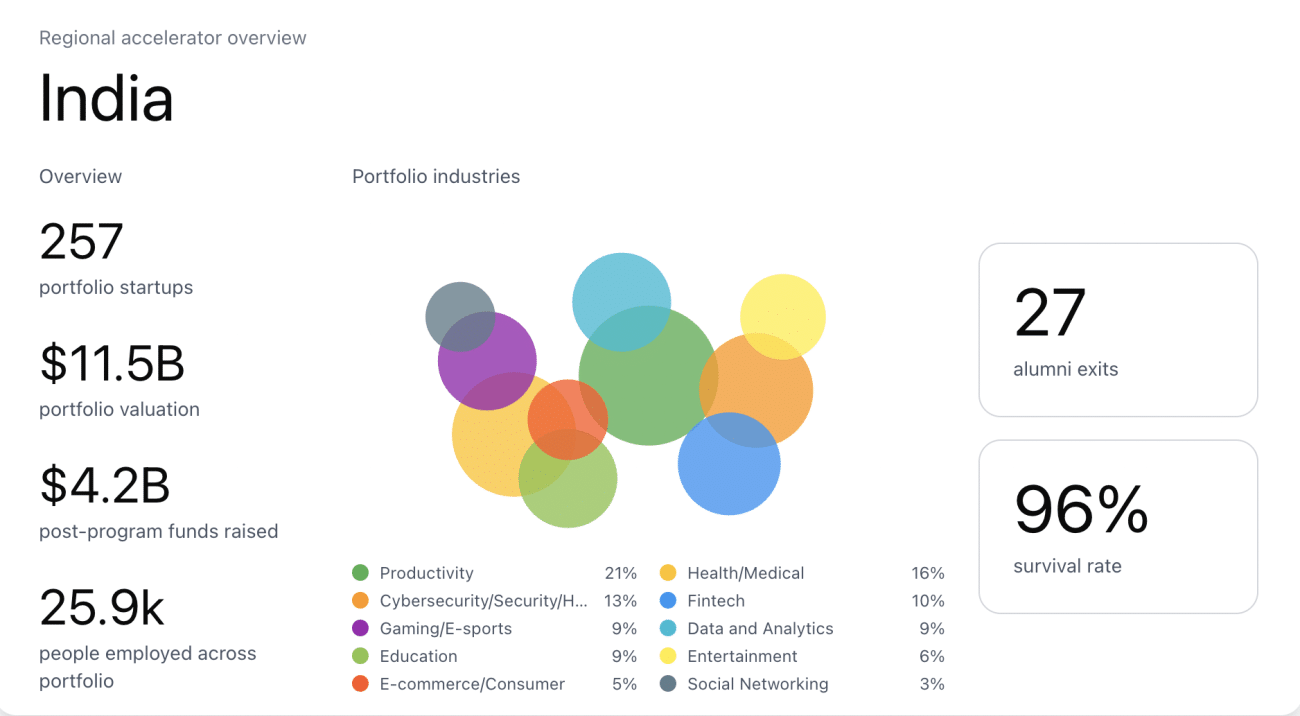
The 2016 cohort saw the rise of ShareChat, an Indic language social media platform that achieved unicorn status in 2021. More recently, the 2022 cohort included VideoVerse, an AI-powered video editing and content creation platform that was acquired by Minute Media, marking one of the largest media-tech and AI exits in India.
Pioneering deep-tech innovators include Niramai from the 2018 cohort, a startup addressing breast cancer detection with a non-invasive, radiation-free, AI-based solution.
Another standout from the 2022 cohort is BrainSight AI, which focuses on AI-powered neuro-diagnostics and prognostics. This startup was also named one of the Top 100 most promising AI startups worldwide by CB Insights.
In 2025, Google’s commitment goes beyond acceleration; it is an active investment in India’s technological future. By integrating AI and deep tech expertise, the programme is positioning Indian AI startups to lead the next era of global AI innovation.
The post How Google’s Accelerator Programmes Fuel India’s AI-Native Startup Ecosystem appeared first on Analytics India Magazine.